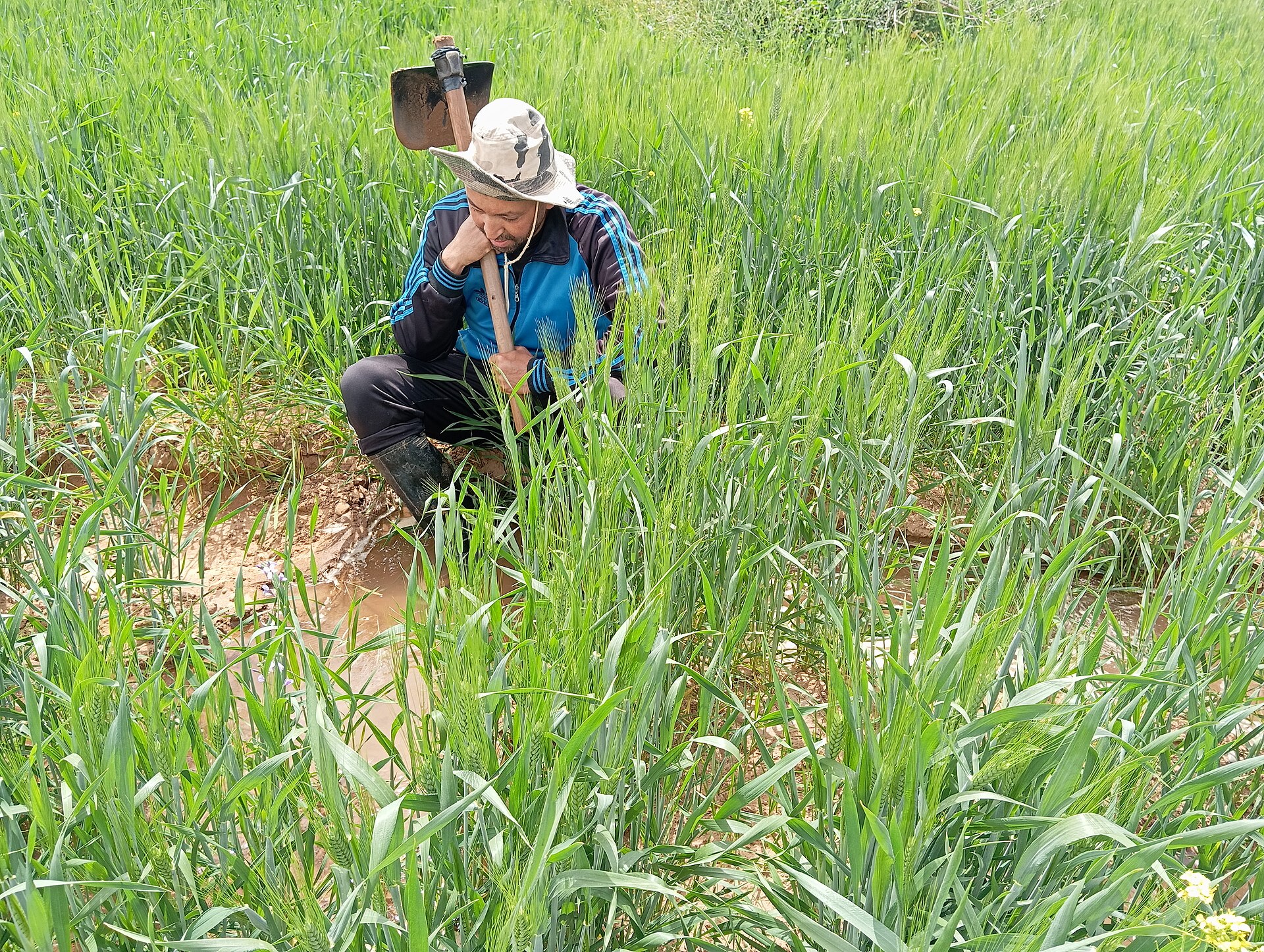
Multi-scenario analysis of stressors and shocks, and the related impacts on the supply chain.
Network-based analysis of trade flows and stressors
This report presents a network-based analysis of international trade flows in unprocessed cereals and fertilisers, with a particular focus on six Middle East and North Africa (MENA) countries—Algeria, Egypt, Jordan, Lebanon, Morocco, and Tunisia—over the period 2000–2023. By examining the evolution of global and regional trade networks from 2000 to 2023, the study illustrates how trade patterns and supply chain linkages in unprocessed cereals and fertilisers have changed over time.
While the networks themselves reveal structural changes, the use of topological network measures allows the identification of the effects of major shocks and stressors—such as the COVID-19 pandemic, the Russia–Ukraine conflict, climate change, conflicts, trade restrictions, and price volatility—on countries’ connectivity, centrality, and trade dependencies. Beyond the network dimension, the report presents trends in the main stressors at both global and regional levels, with particular attention to their potential implications for food security.
A comprehensive overview of the concept of food security is provided through a historical review of its evolving definitions, followed by a descriptive analysis of its four pillars—availability, access, utilization, and stability—disaggregated by income group and geographic region. To contextualize these dynamics, the report includes graphical evidence highlighting recent developments in food access, with a specific focus on the six MENA countries under study.
The report further presents baseline results from a multi-scenario empirical analysis that links food security outcomes to the identified stressors, while explicitly accounting for countries’ centrality within global trade networks for unprocessed cereals and fertilisers. These results are complemented by controls capturing key macroeconomic and structural characteristics, including, for instance, levels of economic development as proxied by GDP per capita. The analysis is first conducted on the full country sample and subsequently extended to separate estimations for high-income and low- and middle-income countries, allowing for the identification of heterogeneous drivers of food availability and food access across different development contexts.
Multi-scenario analysis of food security determinants
The objective of this deliverable is to develop a multi-scenario analysis of potential future stressors and shocks on cereal supply chains deriving from international markets. This will allow analysing the effects of external and domestic shocks on food prices and on food security.
The issue of food security in the Middle East and North Africa (MENA) region has been extensively researched, as the region is highly vulnerable to food security challenges due to its heavy reliance on grain imports. Recent estimates show that around 59.8 million people, equivalent to 13% of the region’s population, are undernourished. The region derives 40% of its dietary energy and 63% of protein from imported grains, making it susceptible to trade disruptions.
The latest research shows that political instability and external shocks significantly impacted food security in MENA countries given the high reliance on cereals imports. Moreover, urban poor populations are particularly at risk, as food security shocks in the region differentially impact poor and urban households.
Supply chain vulnerabilities
The analysis of cereal trade performance and structure in the selected MENA countries outscores the considerable vulnerability of the region’s supply chains to a wide range of stressors. In this regard, geopolitical instability and armed conflicts, particularly in countries located near volatile regions or strategic maritime routes such as the Suez Canal and the Red Sea, can severely disrupt both domestic agricultural activities and international trade. The imposition of sanctions, embargoes, or trade restrictions further limits access to essential suppliers and markets.
The region’s dependence on cereal imports from major producers—including Russia, Ukraine, and the European Union—renders it highly sensitive to global market volatility. Price spikes and export restrictions arising from international crises directly affect food affordability and availability. Compounding this vulnerability, climate change and environmental stressors are steadily reducing local production potential.
Supply chain inefficiencies, including port congestion, shipping delays, and limited storage infrastructure, further exacerbate the region’s exposure. Weak transportation networks, inadequate cold chains, and low levels of automation increase post-harvest losses and limit the capacity to respond rapidly to shocks. These operational challenges intersect with economic and financial constraints, as high debt levels, limited fiscal space, and inflationary pressures reduce governments’ ability to secure adequate cereal supplies and affect consumer purchasing power.
Demographic trends such as rapid population growth and urbanization elevate demand for cereals and more processed products, intensifying pressure on complex supply chains. Institutional and governance challenges, including weak inter-agency coordination, outdated regulations, and lack of transparency, can hinder timely and effective responses to emerging crises.
The literature emphasizes that addressing these vulnerabilities requires a balanced mix of short-term and long-term policy responses. In the short run, policy actions should prioritize protecting vulnerable households from food price shocks and supply disruptions, while longer-term strategies should aim to diversify both food production and trade relationships to reduce exposure to external risks. In this context, reforms to existing support mechanisms also play an important role.
Next steps in the analysis
Building on the network analysis conducted so far, most of the main centrality measures have already been computed and integrated into the dataset used for the multi-scenario analysis. Further refinements may nonetheless be considered to strengthen the interpretation of countries’ positions within international markets for unprocessed cereals and fertilizers and analysing more in-depth the network evolution over time. Alternative community detection methods could be applied to validate and consolidate the current findings, especially with respect to potential changes in group composition when distinguishing between import- and export-origin trade flows.
Turning to the multi-scenario analysis, future work will focus on improving the measurement of key stressors, particularly conflict exposure. Alternative sources with broader country coverage and fewer missing observations may be adopted to enhance robustness. The empirical results presented thus far focus on food availability and food access. The inclusion of additional food security measures will be considered, subject to data availability. Future extensions of the empirical framework will incorporate price dynamics —potentially through a causal mediation approach— as well as a heterogeneous analysis at the regional level. In addition, interaction effects between key covariates might be explored to assess whether specific country characteristics can mitigate the impact of external shocks on food security.
An overview of the project context of the deliverable
This deliverable contributes to the broader objectives of the STAPLES project by providing a multi-scenario analysis of stressors affecting cereal supply chains and their implications for food security. Within the overall project framework, which aims to strengthen the resilience and sustainability of agri-food systems in the MENA region, this report focuses on the role of international trade and external shocks as key drivers of vulnerability.
By combining network-based analysis of global trade flows in unprocessed cereals and fertilisers with an empirical assessment of food security outcomes, the deliverable supports the project’s effort to identify systemic risks and critical dependencies in food supply chains. In doing so, it complements other STAPLES activities that address production, governance, and policy dimensions, providing an integrated perspective on how external stressors—such as climate change, conflict, and trade disruptions—propagate through international markets and affect domestic food systems.
This deliverable was carried out within the framework of the STAPLES project, part of the PRIMA Programme, supported by the European Union under Grant Agreement No. 2333. Views and opinions expressed are those of the author(s) only and do not necessarily reflect those of the PRIMA Foundation or the European Union, and neither of them can be held responsible for the information contained.
Cover Image by Magnific