Osservatori Digital Innovation Conference – Politecnico di Milano
17 June 2026
Milano – Italy
Research insights from the STAPLES Project on food systems, trade policy, and sustainability
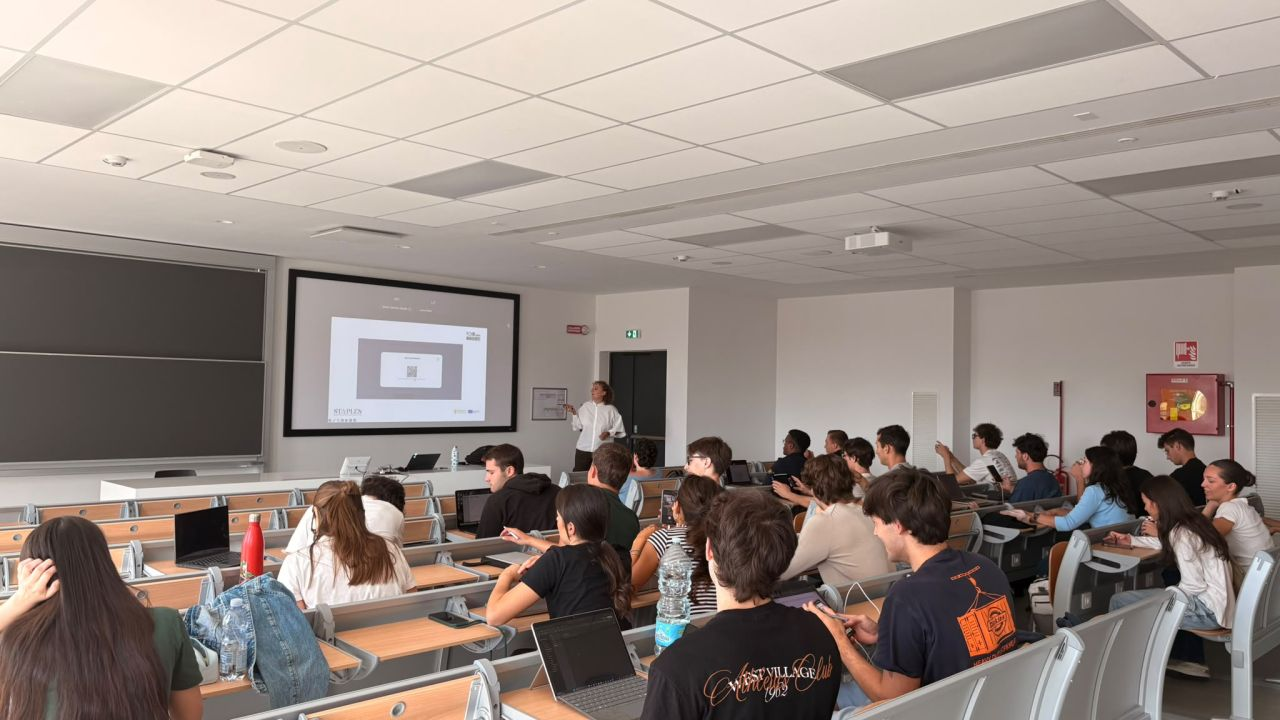
On 17 June, the STAPLES project participated at the Osservatori Digital Innovation Conference, at Politecnico di Milano, on sustainability in the Agri-Food sector.
Representatives of the STAPLES Project (PRIMA Partnership Programme) contributed to the session “From Rules to Vision: Sustainability as a lever of innovation for the Agri-Food industry“, organized by the Osservatori Digital Innovation of Politecnico di Milano.
The event brought together researchers, companies, and institutional stakeholders to discuss the main geopolitical, economic, environmental, and technological factors shaping the sustainability of agri-food supply chains.
The session was moderated by Chiara Corbo and also featured contributions from Paola Garrone.
A video message from Maurizio Martina, Deputy Managing Director of the Food and Agriculture Organization of the United Nations (FAO), introduced the topic.
Within the session “The International Context and the Impact on the Sustainability of Supply Chains Globally”, Professor Federico Caniato (Politecnico di Milano), coordinator of the STAPLES Project, presented the project’s objectives and key outcomes, highlighting STAPLES’ contribution to understanding and strengthening the resilience and sustainability of food supply chains.

Chahir Zaki, University of Orléans and Professor of Economics, Cairo University, representing the Economic Research Forum (ERF) partner of the STAPLES consortium, presented research findings developed within the project on the relationship between trade policies and food security. His presentation focused on how trade measures affect food supply chains and examined the structural challenges facing the Middle East and North Africa (MENA) region, including geopolitical instability, economic vulnerabilities, and environmental pressures.
The discussion addressed the implications of the current international context for agri-food sustainability and explored policy and governance approaches that can support more resilient and secure food systems.

The analyses and scientific results presented during the session are outcomes of the STAPLES Project. In particular, the contributions highlighted research evidence developed within the project on the sustainability of agri-food supply chains, the impact of trade policies on food security, and the main structural challenges in international contexts, with a special focus on the MENA region.
This article was carried out within the framework of the STAPLES project, part of the PRIMA Programme, supported by the European Union under Grant Agreement No. 2333. Views and opinions expressed are those of the author(s) only and do not necessarily reflect those of the PRIMA Foundation or the European Union, and neither of them can be held responsible for the information contained.