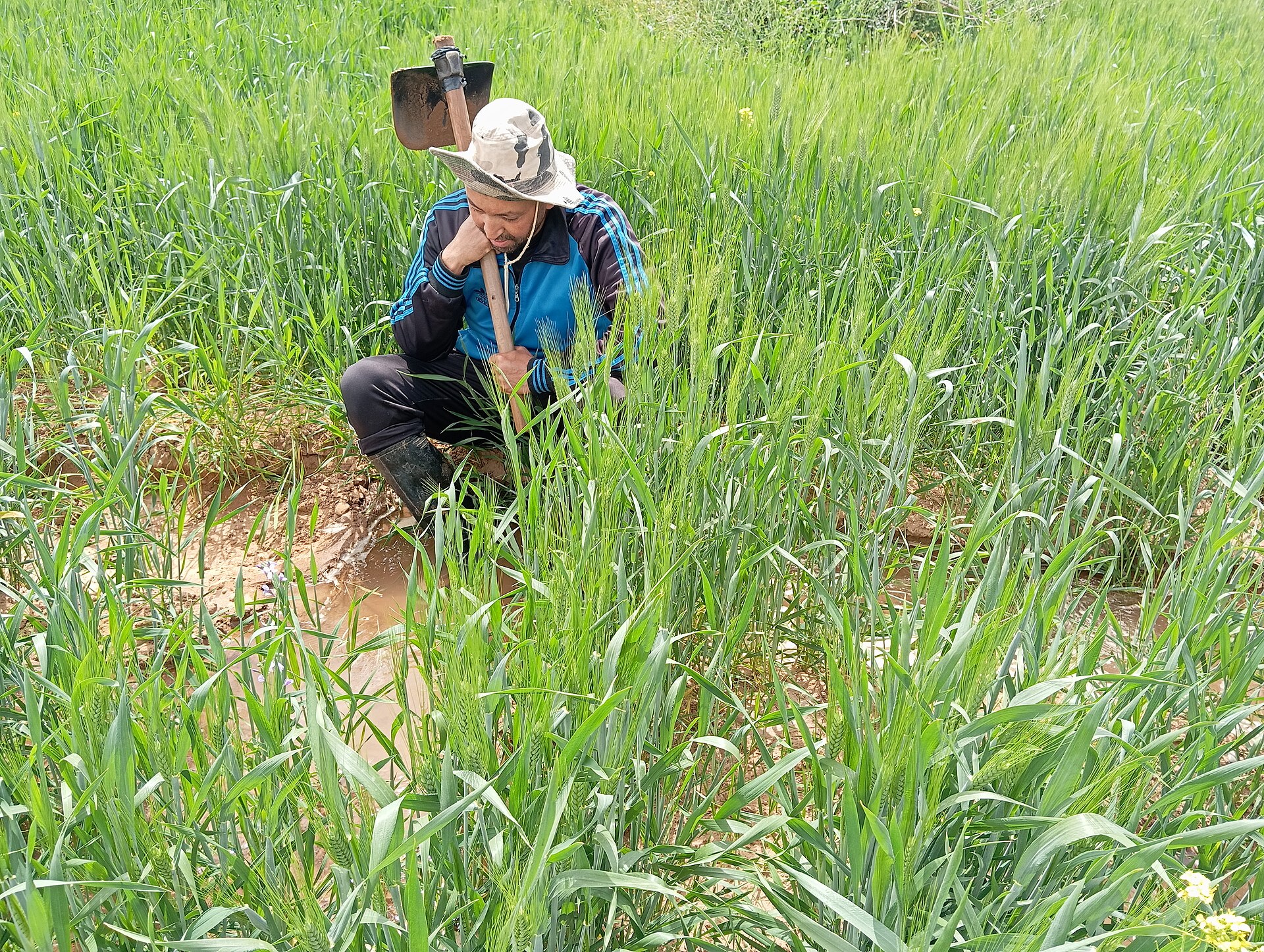
Why Egypt imports billions worth of wheat despite having agricultural land
April 2026
Author: Dina Moawad (University of gastronomic Science of Pollenzo)
The question of why Egypt imports billions of dollars worth of wheat despite having agricultural land comes up frequently—and finding an answer is indeed needed.
Egypt’s wheat imports are often seen as puzzling—after all, the country has agricultural land. Yet, behind this apparent paradox lies a complex interplay of water scarcity, population pressure, productivity challenges, and economic considerations. Understanding these factors is crucial for food security policy and for exploring sustainable agricultural strategies.
The following breakdown, proposed by Dina Moawad, Research Fellow, Academic Writer, and Economic Analyst, part of the UNISG team, one of our project partners, explains why Egypt relies heavily on wheat imports and how the STAPLES Project is investigating these challenges.
Wheat is a water-intensive crop
Cultivating just one feddan of wheat requires about 2,500–3,000 cubic meters of water. Egypt already faces significant water constraints (its annual Nile share is about 55.5 billion m³), making large-scale wheat cultivation challenging.
A large population means high consumption
Wheat is a strategic staple that cannot be substituted. In Egypt, bread is a daily essential, leading to massive demand. Average per capita consumption ranges between 150–180 kg annually—one of the highest globally—largely due to reliance on subsidized bread.
Productivity is not the highest
Some countries achieve higher yields per feddan thanks to better water availability, advanced technologies, favorable climates, and improved seeds. In Egypt, wheat production is about 9–10 million tons annually, while consumption reaches around 20–21 million tons, leaving a gap of over 10 million tons that must be filled through imports.
Land use priorities
A significant portion of agricultural land is allocated to other crops (such as fruits, vegetables, and export-oriented produce) because they generate higher income for farmers. This is especially important given that only about 3.5–4% of Egypt’s total land area is cultivated, with the rest being desert.
The economics of imports
As of 2025, Egypt remains the world’s largest wheat importer, bringing in about 10–12 million tons annually at a cost of roughly $3–5 billion, depending on global prices. Currency shortages and unexpected global shocks can disrupt supply chains, making wheat procurement one of the government’s most complex challenges—and posing risks to food security.
These factors make Egypt’s food security highly sensitive to global disruptions—from the COVID-19 pandemic to the Russia–Ukraine war (two of the world’s largest wheat exporters), and even ongoing geopolitical tensions affecting trade routes.
Economic incentives and farmer behavior
Farmers in Egypt make decisions based on profit, risk, and cash flow—not national food security goals. Wheat is less attractive than other crops because it offers lower returns, slower income, and uncertainty around government pricing and payments. As a result, farmers rationally choose more profitable crops, even though this increases Egypt’s reliance on imports. The core issue is a mismatch between individual economic incentives and national priorities.
Hidden losses: food waste and inefficiencies
A significant but often overlooked issue is food loss and waste. Large amounts of wheat are lost due to inefficiencies in storage, transport, and processing, while subsidized bread encourages overconsumption and waste. Reducing these losses could improve food security without increasing production or imports.
Policy structural trade-offs
Government policies shape both demand and supply imbalances. Bread subsidies keep demand consistently high and discourage efficient consumption, while procurement policies fail to sufficiently incentivize farmers to increase wheat production. This creates a structural gap in which demand is supported, but supply is not. More broadly, it raises the question of whether full wheat self-sufficiency is economically rational, as importing wheat may be more efficient given Egypt’s resource constraints.
This is the context in which the STAPLES Project is working, exploring this issue in depth.
The answer to the initial question is a delicate equation of water, population, cost, and productivity. Even when these factors are balanced, countries still need strong resilience systems and early warning mechanisms to navigate unexpected global or local crises.
Egypt’s reliance on wheat imports illustrates the complex balance between natural resources, population needs, and economic realities. Water scarcity limited arable land, high domestic demand, and global market volatility all converge to create a situation in which food security cannot be taken for granted.
This example highlights that even countries with significant agricultural potential must adopt strategic planning, invest in resilient supply chains, and diversify agricultural policies to ensure long-term sustainability. Understanding these dynamics is crucial not only for Egypt but for any nation facing the challenges of feeding a growing population in a world of finite resources and increasing climate uncertainty.
This article was carried out within the framework of the STAPLES project, part of the PRIMA Programme, supported by the European Union under Grant Agreement No. 2333. Views and opinions expressed are those of the author(s) only and do not necessarily reflect those of the PRIMA Foundation or the European Union, and neither of them can be held responsible for the information contained.
Cover photo by Bearfotos on Magnific