Plenary Meeting in Morocco
5-6 May 2026
Agadir – Morocco
Driving evidence-based solutions for sustainable food systems
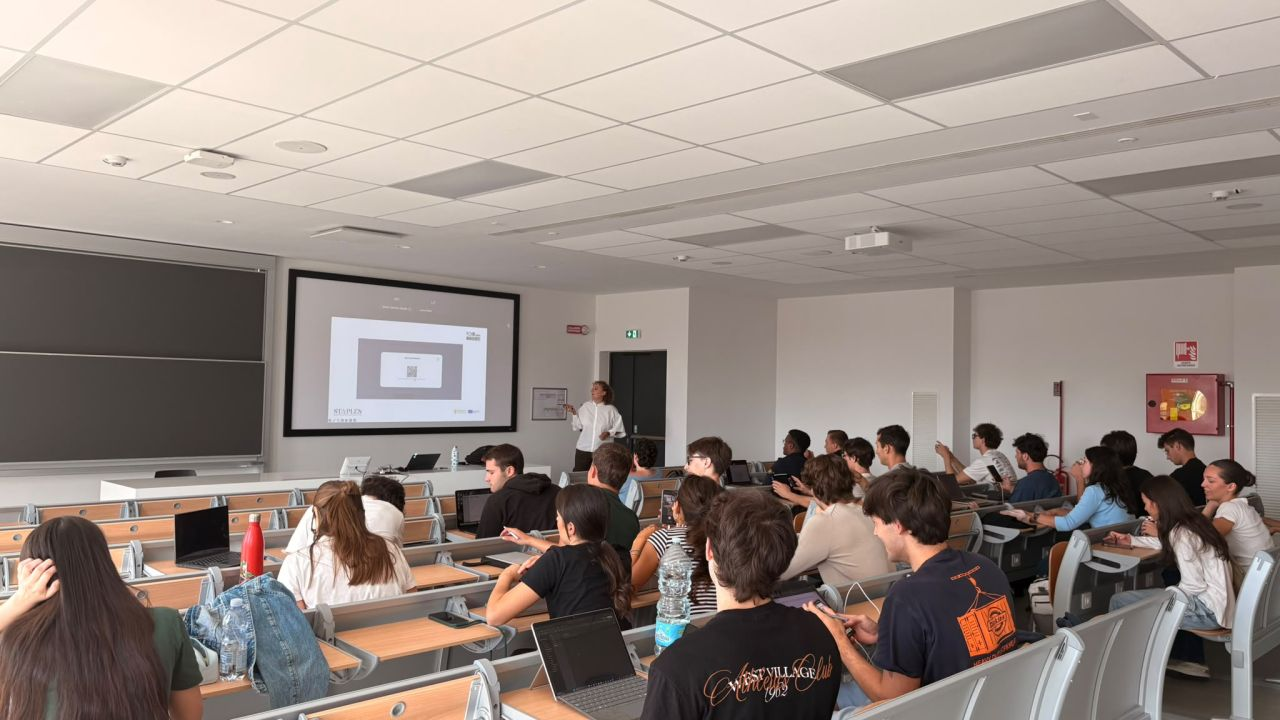
The STAPLES Project consortium met on 5–6 May 2026 in Agadir, Morocco, for the project Plenary Meeting, hosted by Université Ibn Zohr.
During the two-day meeting, project partners presented updates and progress across all Work Packages, discussing ongoing activities, technical developments, research results, and upcoming actions. The meeting provided an opportunity to review the current status of the project and coordinate the next steps toward strengthening resilient and sustainable food systems in the MENA region.
The plenary meeting also supported the alignment of future activities and reinforced collaboration among consortium members within the framework of the PRIMA Partnership Programme.
The consortium was very appreciative to Université Ibn Zohr for the organisation of the meeting and for hosting all project partners in Agadir.
The consortium jointly presented the activities undertaken toward its objectives, including the development of operational recommendations for food system resilience, the promotion of awareness on sustainable and traditional cereal production systems, and the strengthening of regional cooperation and international competitiveness across MENA countries.
Project activities focused on giving updates on the development of innovative and affordable solutions for stakeholders, including agricultural machinery for smallholders, as well as IT tools designed to support decision-making and preparedness. These include a Dashboard aimed at improving information availability and preparedness of governments and economic actors in anticipating and coping with external stressors and shocks, and a Decision Support System to support stakeholders in defining appropriate strategies.
Understanding external stressors and shocks
Partners shared the results achieved so far within Work Package 1, highlighting progress made through analytical activities aimed at improving the understanding of risks affecting the cereal value chain. Discussions focused on ongoing efforts to identify vulnerabilities and potential disruptions, contributing to the development of resilience-building strategies for the sector.
Developing innovative solutions and evidence-based recommendations: Global Value Chain
Partners highlighted the results achieved within Work Package 2, presenting progress made through analytical activities, fieldwork, and stakeholder engagement. Discussions focused on innovative solutions aimed at enhancing domestic agricultural production in the MENA region, addressing key challenges such as water scarcity and land management, with the objective of strengthening local food production capacity and reducing dependency on imports.
Developing innovative solutions and evidence-based recommendations: Domestic agricultural production
Partners presented the results accomplished within Work Package 3, highlighting progress made through analytical activities, fieldwork, and stakeholder engagement. Discussions also included activities related to the co-development of a multipurpose modular agricultural machine for smallholders, based on insights gathered through local workshops and direct engagement with farmers and stakeholders, who contributed to identifying needs and prioritising solutions for more efficient and sustainable farming practices.
Designing information and decision support tools
Partners reported the results reached within Work Package 4, highlighting progress in the development of digital tools, including the Dashboard and Decision Support System.
For the Dashboard, discussions focused on the development of early warning components and on feedback collected on the preliminary version. These activities aim to support policymakers and economic actors by improving access to relevant information, strengthening preparedness, and enhancing resilience across the cereal value chain.
For the Decision Support System, partners addressed the implementation of preliminary feedback on existing functions and the completion of related documentation. Future activities will include the final selection of competing crops, the integration of water productivity within the Virtual Water Simulator, and the development of additional functions related to private storage and market attractiveness, further enhancing the system’s analytical capacity.
The Agadir Plenary Meeting provided an important opportunity to review progress across all Work Packages, consolidate ongoing activities, and align the next steps of the STAPLES Project.
The event also contributed to the definition of the upcoming STAPLES multi-stakeholder dialogues, scheduled to take place in Rabat and Cairo in November 2026, which will bring together stakeholders from research, policy, and practice to foster evidence-based exchange on food security and cereal value chains in Egypt and Morocco, with the aim of strengthening the relevance, uptake, and impact of project results at national and regional level.
This article was carried out within the framework of the STAPLES project, part of the PRIMA Programme, supported by the European Union under Grant Agreement No. 2333. Views and opinions expressed are those of the author(s) only and do not necessarily reflect those of the PRIMA Foundation or the European Union, and neither of them can be held responsible for the information contained.