AIB Africa Chapter Conference 2026
May 2026
Nairobi – Kenya
Exploring resilience, trade dependencies, and adaptive capacities in cereal value chains across the MENA region
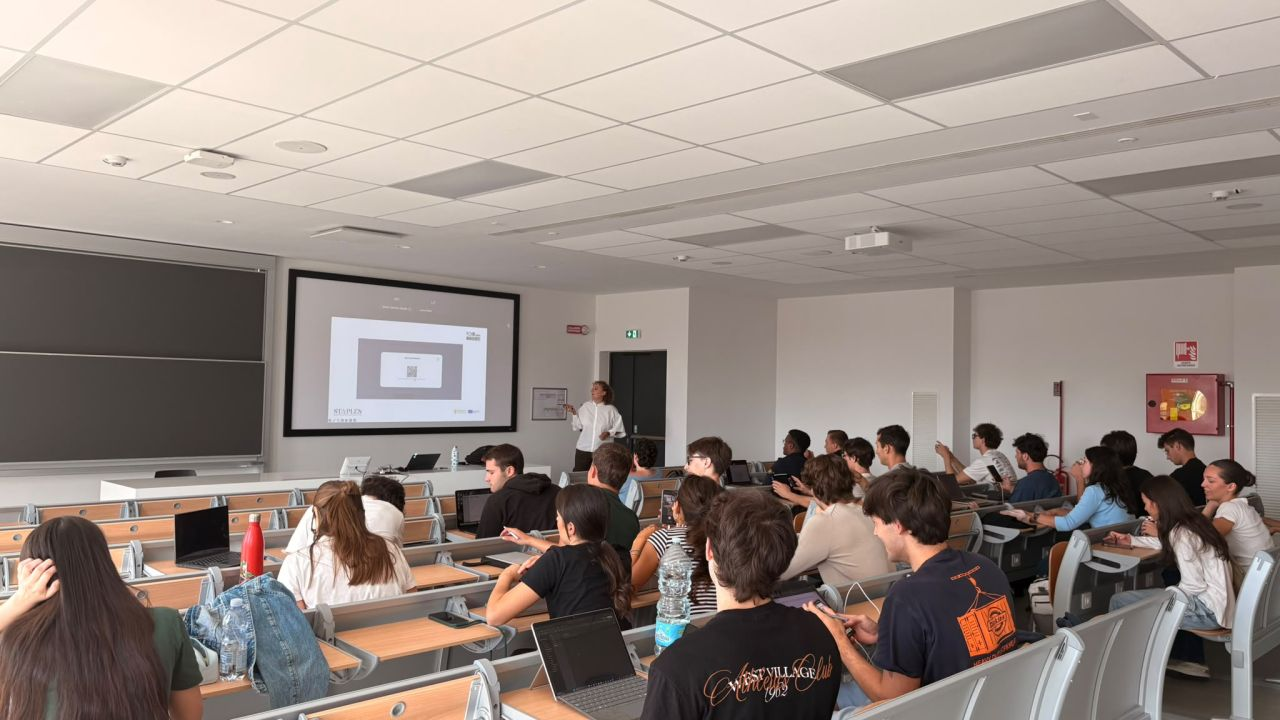
The STAPLES project participated in and contributed to the AIB Africa Chapter Conference 2026 in Nairobi, Kenya, through the panel session “GVC resilience in turbulent times – Evidence from FDI data and the STAPLES Project”.
Chaired by Marta Marson (Politecnico di Milano), the panel contributed to the conference theme “Navigating uncertainty, complexity, and redefining limits: Africa’s role in shaping global business” by bringing together perspectives from international business, economic geography, food security, and global value chain analysis.
The session highlighted how STAPLES project contributes to understanding vulnerabilities and resilience mechanisms affecting cereal Global Value Chains (GVCs) across the MENA region, with a particular focus on external shocks, trade dependencies, and firm-level adaptive capacities.
The STAPLES project, supported by the PRIMA Programme funded by the European Union, aims to create knowledge and practical tools to strengthen the resilience of cereal value chains and improve preparedness against geopolitical, climatic, and economic shocks.
Researchers from Politecnico di Milano) presenting in the panel included Marta Marson and Marta Caterina Vignali, while Iacopo-Maria Taddei (Collegio Carlo Alberto) contributed to the discussion on agri-food value chains and trade flows. The panel brought together complementary research contributions addressing different dimensions of resilience in cereal supply systems, including:
- cereal trade networks and import dependency in the MENA region;
- the development of integrated early warning tools for cereal supply stability;
- firm-level resilience capabilities in Egypt and Morocco.
The papers
The papers presented during the session further illustrated the interdisciplinary and policy-oriented approach of the STAPLES project, combining trade analysis, food security, supply chain resilience, and decision-support tools. Those were contributed by Politecnico di Milano, Collegio Carlo Alberto and Economic Research Forum.
Global agri-food value chains for cereals in the MENA region: players, trade flows, and products
Authors: Alessia Amighini, Giorgia Giovannetti, Fida Karam, Amr Khafagy, Iacopo-Maria Taddei, Chahir Zaki.
Over the past two decades, cereal value chains in the MENA region have been shaped by a structural vulnerability: a strong and persistent demand for unprocessed cereals alongside very limited cereal exports. Countries such as Algeria, Egypt, Jordan, Lebanon, Morocco, and Tunisia remain heavily dependent on imports to meet domestic consumption needs—especially for staples like wheat, maize, barley, and rice. In particular, Egypt stands out as the world’s largest wheat importer, relying predominantly on few suppliers, notably Russia and Ukraine, despite recent diversification efforts.
Against this backdrop, STAPLES examines how the structure of cereal trade networks contributes to the region’s vulnerability, seeking to inform policies aimed at strengthening food security and resilience to external shocks. Our analysis tracks cereals across their value chain—from primary production to processing and final consumption—showing that unprocessed cereals dominate import flows, while exports are largely limited to processed products.
Network evidence reveals that imports are highly concentrated: in 2023, the top three suppliers accounted for between 40% and 69% of total cereal imports. Such patterns underscore a structural dependence on a small set of suppliers in geopolitically sensitive regions, leaving MENA economies exposed to trade disruptions, price shocks, and climate-related risks.
Presented by Iacopo Maria Taddei

Caught between Limited Production and Unreliable Import: An Integrated Early Warning Tool for Cereals Supply for Southern Mediterranean Countries
Authors: Marta Marson, Sandra Cesari De Maria.
Stability is a pillar of food security which does not only require food to be available, accessible and well utilized, but also that these conditions are stable and predictable, stressing the centrality of information. Stability can be put at risk by several domestic and external factors. MENA countries are particularly exposed to international shocks in cereals’ markets.
Based on an extensive review of available IT tools that provide relevant information and early warning, some gaps and need were identified. As food supply and food security depend on the combination of domestic production and import, it is important that the two are considered jointly.
Moreover, shocks of different types are seldom considered together in the same dashboard, while there is a need to consider all the shocks that might impact on staple foods of MENA countries. This should include shocks within MENA countries, like the ones that affect agricultural production, and also external shocks that are global in nature or that occur in countries that are connected to the MENA country through trade of the product of interest and its inputs.
Based on these considerations STAPLES is developing a dashboard to address these gaps with a tool specific for cereals and staple foods and for MENA countries.
Presented by Marta Marson

From Shock to Recovery: Firm-level Resilience in Cereal GVCs in Egypt and Morocco
Authors: Lucia Piscitello, Marta Caterina Vignali
Despite the growing attention to the resilience of agri-food Global Value Chains (GVCs), empirical evidence on how firm-level characteristics shape the resilience capacities from systemic shocks remains scarce, particularly for actors operating in cereal GVC in the MENA region.
Our research, developed within the STAPLES project, investigates the exposure of wheat supply chain actors in Egypt and Morocco to shocks of different nature (economic, geopolitical, climatic, and logistic) and assesses their micro-level resilience capabilities and post-shock performance outcomes.
Drawing on GVC resilience literature, we organize firm-level resilience indicators around three core capabilities: absorptive capacity, adaptive capacity, and restorative capacity. The empirical analysis relies on a structured survey designed ad hoc and administered to the full range of actors along the cereal GVC (farmers, storage operators, processors, and importers) in both countries. Following a pilot testing phase, data were collected through ASCAME and the Chambers of Commerce of Morocco and Egypt, in French and English respectively, maintaining an identical structure to ensure cross-country comparability.
Preliminary results confirm that resilience capabilities are closely related to the structural characteristics of actors’ GVCs, varying significantly across supply chain segments, yet displaying notable similarities between the two countries.
These findings, further elaborated into a decision support tool, will help policymakers and industry stakeholders strengthen firm-level resilience to external shocks, ultimately contributing to the stability and robustness of cereal GVCs in the region.
Presented by Marta Caterina Vignali

The sessions represented an important opportunity to disseminate STAPLES research outcomes within the international academic and policy debate on food security, resilience, and sustainable development in Africa and the Mediterranean region.


This article was carried out within the framework of the STAPLES project, part of the PRIMA Programme, supported by the European Union under Grant Agreement No. 2333. Views and opinions expressed are those of the author(s) only and do not necessarily reflect those of the PRIMA Foundation or the European Union, and neither of them can be held responsible for the information contained.