Cereal supply and import vulnerability across MENA economies
The content published on this website is an excerpt from the original articles recently published by the The Forum | ERF Policy Portal.
- “How trade policy can reduce MENA’s cereal import vulnerability” by Fida Karam, Amr Khafagy and Chahir Zaki
- “The weak bread chain: cereal supply risks in six MENA economies” by Fida Karam, Amr Khafagy and Chahir Zaki
The full publications are available on The Forum | ERF Policy Portal.
Exploring cereal supply vulnerability in MENA economies
Two recent articles, written by STAPLES partner Chahir Zaki (ERF and University of Orléans) together with Fida Karam (ERF and Gulf University for Science and Technology) and Amr Khafagy (ERF and London Metropolitan University), examine cereal supply and food security challenges in the Middle East and North Africa (MENA).
The first, “How trade policy can reduce MENA’s cereal import vulnerability”, was published on 4 August 2026, while the second, “The weak bread chain: cereal supply risks in six MENA economies”, was published on 22 September 2026, both published in The Forum | ERF Policy Portal.
The two articles are presented together because they address closely related aspects of the same challenge explored within the STAPLES project. The first examines the role of trade policy in reducing cereal import vulnerability, while the second focuses on the concentration of cereal import suppliers and the risks associated with dependence on a limited number of sources.
Both contributions draw on the research developed within STAPLES project, including Deliverable 2.1, “Resilience-enhancing trade policies reducing MENA dependency on non-Mediterranean countries.”
Food security in MENA is strongly affected by cereal import dependence. In the six countries considered – Algeria, Egypt, Jordan, Lebanon, Morocco and Tunisia – cereal import dependency ranges from 43% in Egypt to 99% in Jordan. Limited arable land, water scarcity, population growth and climate pressures constrain domestic production, while recent crises have highlighted the vulnerability of international cereal supply chains.
“How trade policy can reduce MENA’s cereal import vulnerability”
by Fida Karam, Amr Khafagy and Chahir Zaki
“Heavy dependence on imported cereals, combined with climate change, water scarcity and geopolitical uncertainty, continues to threaten food resilience across MENA. This column explains how an inclusive trade policy can play a key role in making the region’s food security less vulnerable to shocks”.
Source: The Forum | ERF Policy Portal, 4 August 2026
The first article examines how an inclusive trade policy can support cereal supply resilience by combining affordable access to food, support for domestic producers, diversification of import sources, reduced trade costs and stronger food supply chains.
The analysis highlights the importance of import-source diversification. Before the Russia-Ukraine war, Egypt, Lebanon and Tunisia relied heavily on Russian and Ukrainian wheat. Following the disruption of Black Sea exports, imports shifted towards alternative suppliers including Brazil, Bulgaria, Canada and Romania.
The article also examines trade interventions, noting that major cereal exporters introduced more than 220 trade interventions between 2020 and 2025. Russia introduced 115 export-related policies between 2022 and 2024, including export taxes, bans and tighter licensing.
The analysis identifies several areas relevant to resilience: diversifying suppliers, investing in domestic agricultural productivity, reducing unnecessary trade costs and non-tariff barriers, improving logistics and transport services, and deepening regional and Mediterranean trade integration.
“The weak bread chain: cereal supply risks in six MENA economies”
by Fida Karam, Amr Khafagy and Chahir Zaki
“The Middle East and North Africa is one of the most food-import-dependent regions of the world, particularly for staple cereals such as barley, maize and wheat, and particularly in six countries – Algeria, Egypt, Jordan, Lebanon, Morocco and Tunisia. As this column reports, diversifying import sources has become an essential strategy for strengthening food security and improving resilience to geopolitical and climate-related disruptions”.
Source: The Forum | ERF Policy Portal, 22 September 2026
The second article focuses on the concentration of cereal import suppliers in Algeria, Egypt, Jordan, Lebanon, Morocco and Tunisia. It uses the Herfindahl-Hirschman Index (HHI) to examine import concentration between 2010 and 2023.
The analysis finds different trends across the six countries. Algeria and Morocco reduced import concentration, while Egypt, Jordan and Lebanon experienced increasing concentration, with Tunisia showing a slight increase. Egypt and Algeria recorded the highest maximum HHI values, above 0.35.
The Russia-Ukraine war provides a stress test of these supply structures. In 2020, Russia and Ukraine supplied more than two-thirds of Egypt’s cereal imports, nearly half of Lebanon’s and 44% of Tunisia’s. The analysis also identifies dependence on imported agricultural inputs – including seeds, pesticides, fertilisers and machinery – as an additional source of supply risk.
Two angles on cereal supply vulnerability
The two articles examine different but connected dimensions of cereal supply vulnerability. “How trade policy can reduce MENA’s cereal import vulnerability” considers the trade policies and conditions that can support greater resilience, while “The weak bread chain: cereal supply risks in six MENA economies” provides a more specific analysis of supplier concentration and its evolution over time.
Together, the articles highlight that cereal import dependence is a structural feature of the six economies studied, while the degree of diversification of import sources represents another important dimension of supply risk. They also point to the relevance of domestic production, agricultural inputs, logistics and the wider trade environment when considering cereal supply resilience.
Conclusion
These STAPLES-related contributions provide complementary evidence on cereal supply challenges in MENA, combining an analysis of trade policy and resilience measures with an assessment of import concentration and supplier-related risks. Their findings contribute to the STAPLES research on how trade and food systems in the region can become more resilient to external shocks.
This article was carried out within the framework of the STAPLES project, part of the PRIMA Programme, supported by the European Union under Grant Agreement No. 2333. Views and opinions expressed are those of the author(s) only and do not necessarily reflect those of the PRIMA Foundation or the European Union, and neither of them can be held responsible for the information contained.
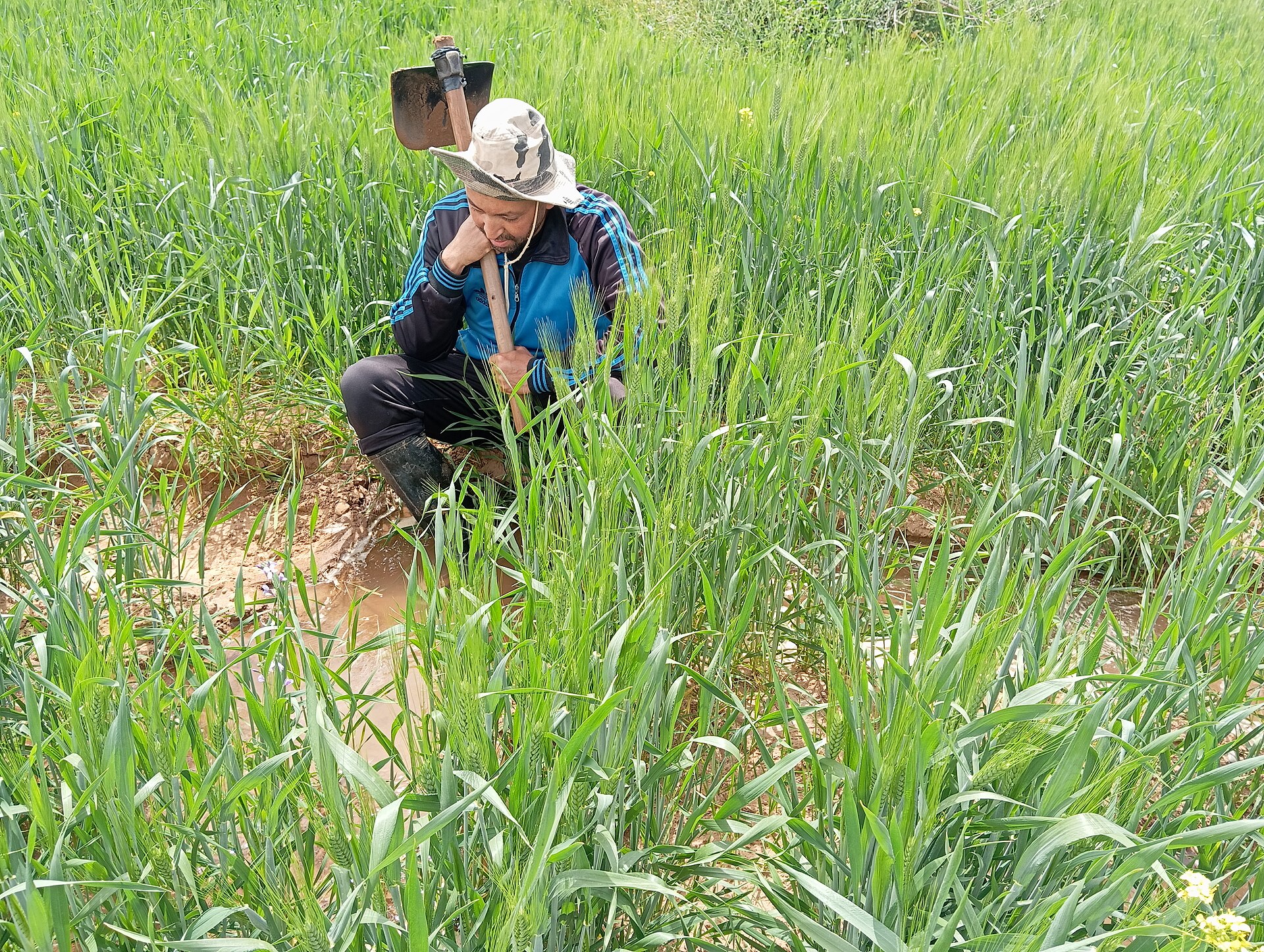
Cover Image by Mustapha Bassouh CC-BY-SA-4.0 via Wikimedia Commons.